

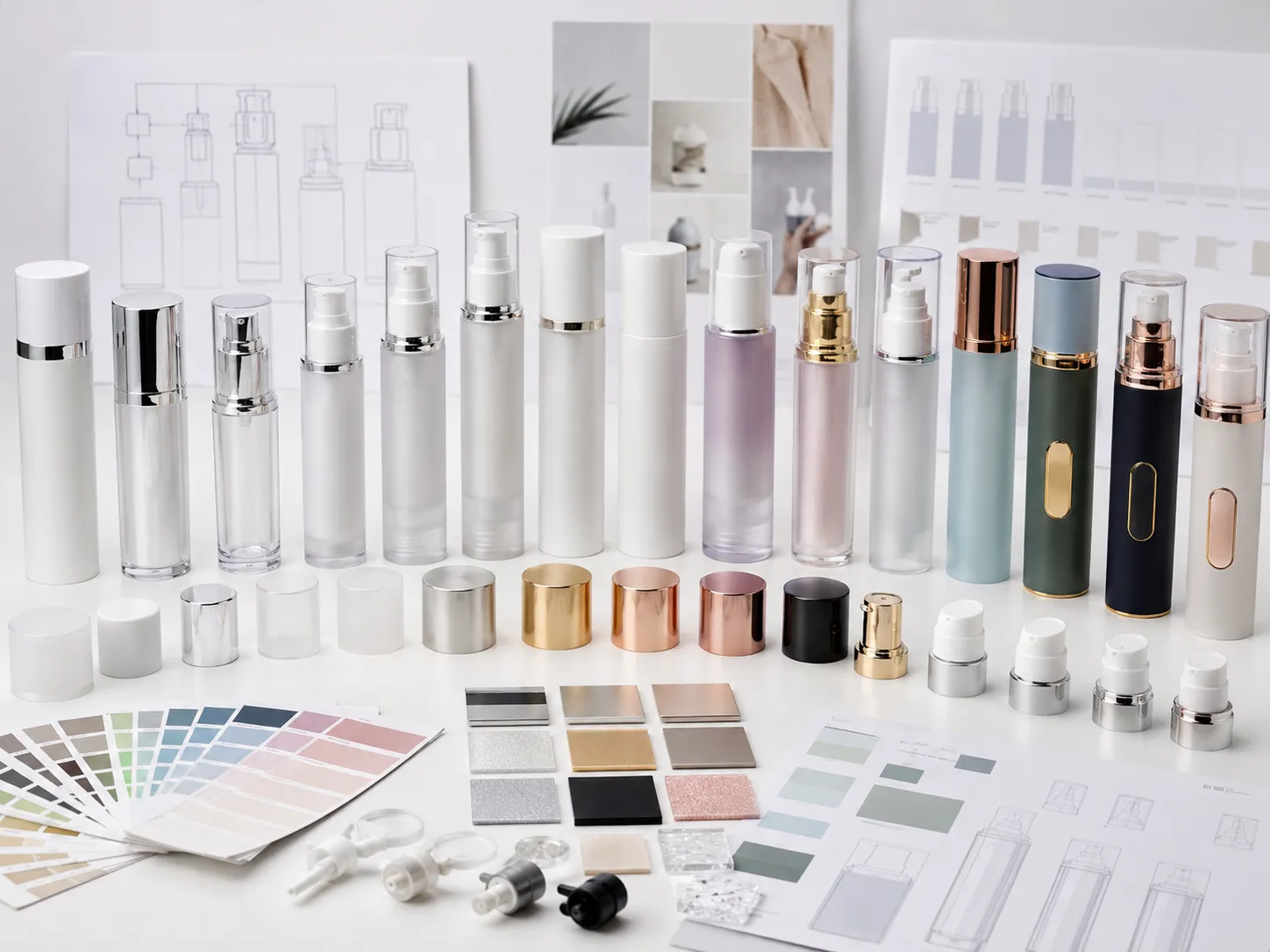
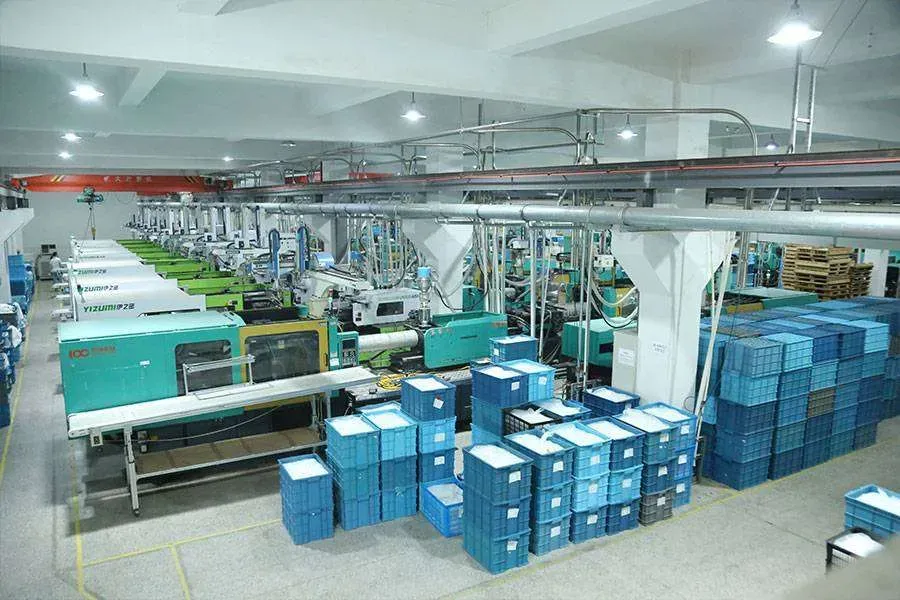

Molding, decoration, assembly and inspection are coordinated through one production workflow.
From approved sample to repeatable production.
Component fit, color, decoration and packing requirements are documented before the production run begins.
10 sets
Printing presses
4 sets
Hot stamping machines
1 line
Spraying capability
1 line
Electroplating capability
A clear path to production.
Share requirements
Formula, capacity, quantity, market and decoration needs.
Confirm components
Match bottle, pump, closure, material and finish.
Approve samples
Review structure, appearance, assembly and compatibility.
Produce and inspect
Manufacture against the signed sample and shipping specification.
Quality checks tied to real filling risks.
Inspection focuses on leakage, dispensing, component fit, color consistency and transport readiness.
Component fit
Bottle, pump, cap, collar and inner parts are checked as an assembled system.
Pump performance
Dispensing action, output consistency and return are reviewed.
Color and decoration
Production is compared with the approved signed sample.
Leakage and packing
Finished packs are inspected before shipment release.
Sustainability starts with packaging decisions.
We help brands compare practical ways to reduce virgin material, extend component use and simplify end-of-life material streams.
Reduce
Review wall thickness, component count and pack weight while protecting dispensing performance and filling-line stability.
Reuse
Develop refillable jars and bottles with replaceable inner cartridges for packaging intended to stay in use longer.
Recycle
Consider PCR options and PP-led mono-material structures where the selected format, decoration and market allow them.
Redesign
Rework structures, pumps and decoration choices to reduce unnecessary parts and improve material compatibility.
Material availability and recyclability vary by component, decoration, formula and local collection system. Final claims should be confirmed for the intended market.
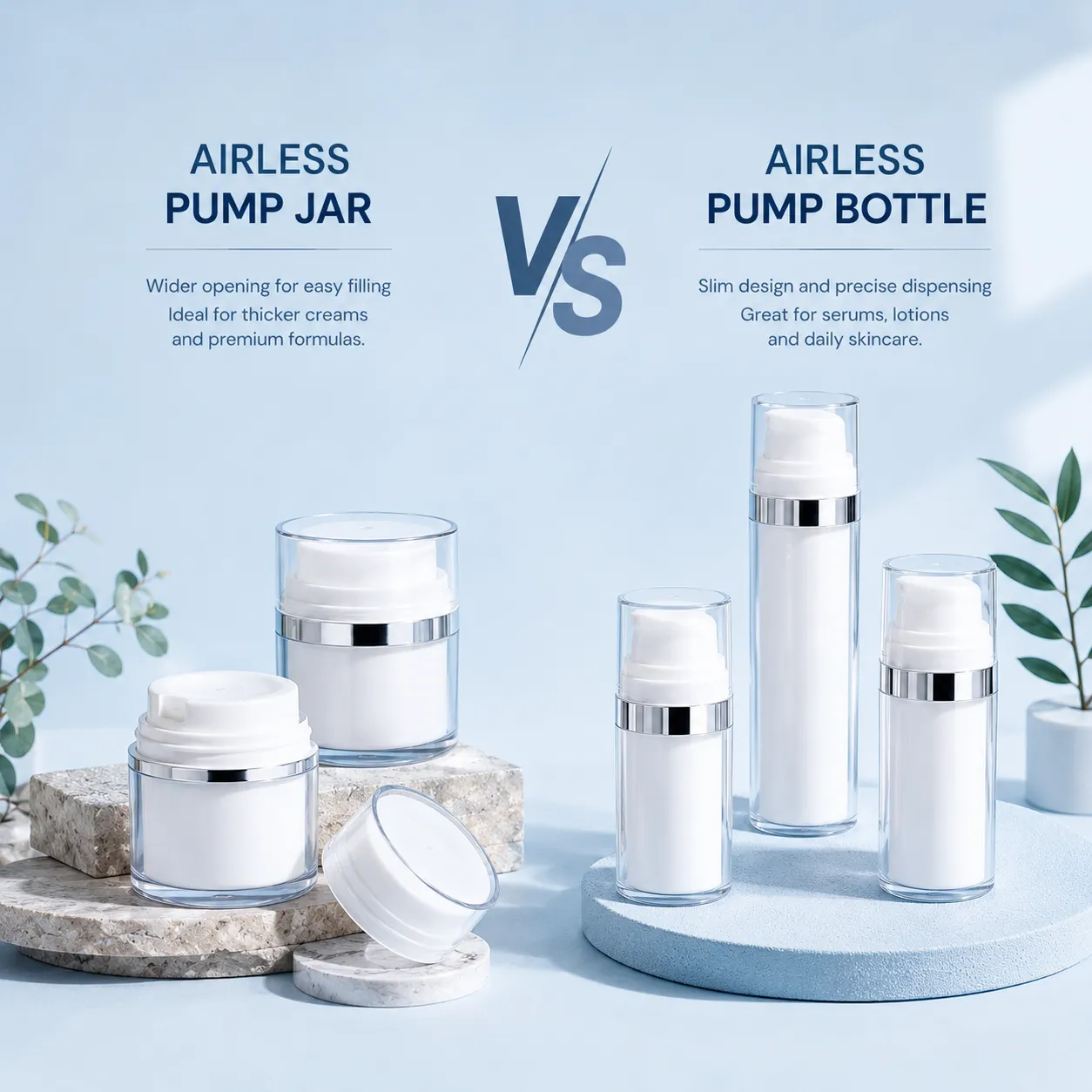
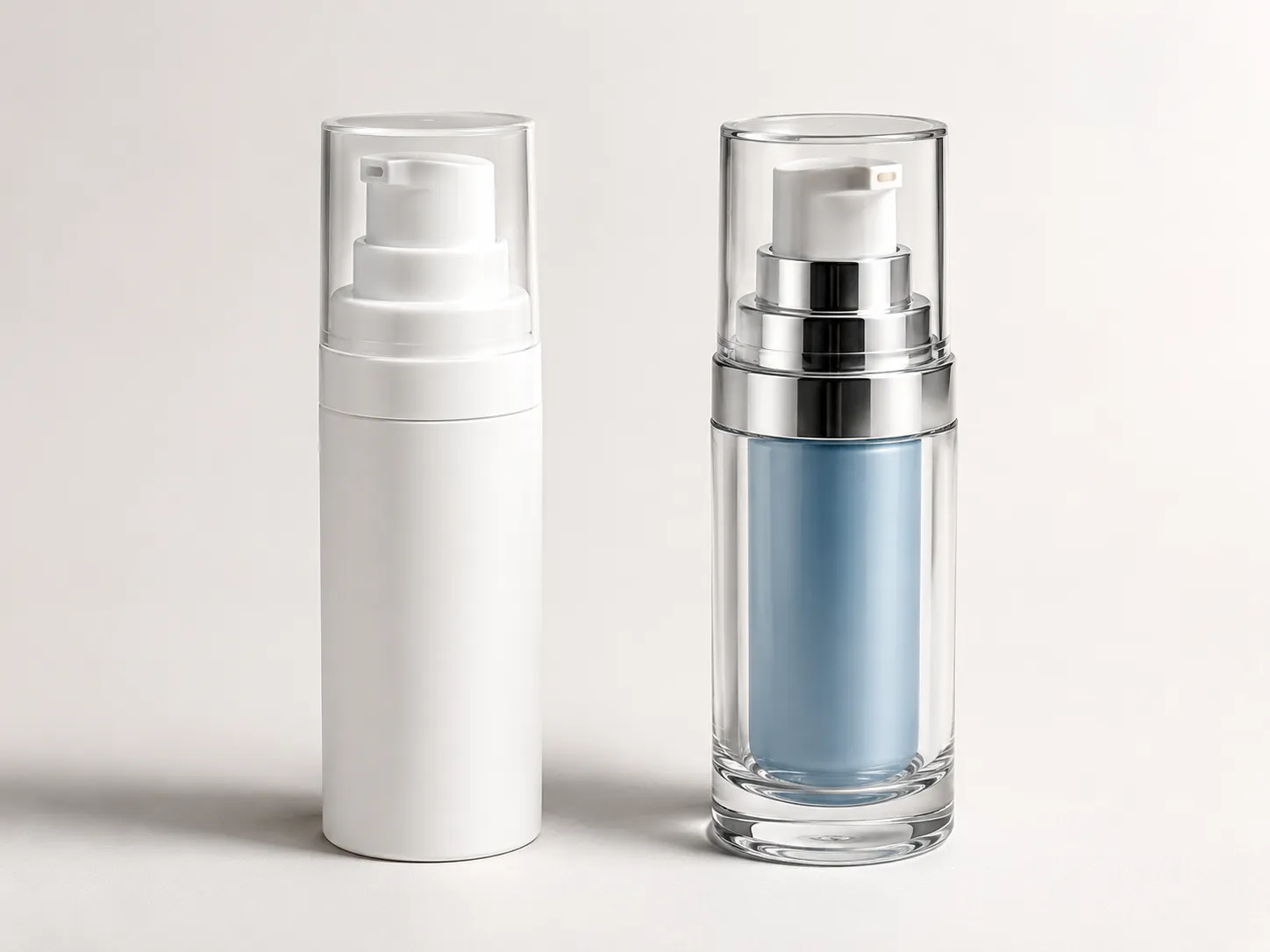
PP and acrylic are two widely used material options for airless skincare packaging, but they serve different product strategies. A PP airless bottle is generally selected for its lightweight construction, impact resistance, flexible color customization, and suitability for cost-controlled mass production. An acrylic airless bottle, by comparison, is often chosen for its thicker walls, high